








Blood pressure is determined by the amount of blood your heart pumps and the amount of resistance to blood flow in your arteries. The more blood your heart pumps and the narrower your arteries, the higher your blood pressure.
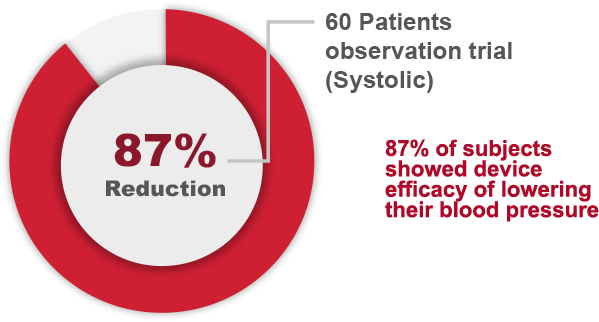
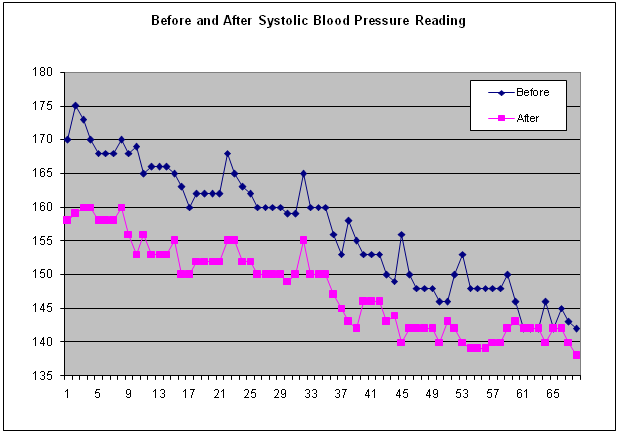
In our pilot clinical trial conducted with 60 patients over 68 days, a typical patient had a systolic BP of 176 mmHg. After his first PhysioCue therapy session, his BP dropped to 155 mmHg. Daily 5-minute therapy sessions produced consistent similar results, and his sustainable BP steadily dropped to 134 mmHg— a total reduction of 42 mmHg.
Results from a major heart study showed that the benefit of reducing blood pressure, by even a few mmHg, leads to significant reductions in the risk of coronary heart disease and stroke incidents: “A reduction in diastolic blood pressure of only 2 mmHg leads to a 9% reduction in coronary heart disease, and a 15% reduction in stroke incidents. A 7.5 mmHg reduction leads to a 29% reduction of coronary heart disease, and a 48% reduction in stroke incidents.