Migraine

The mechanical-thermal stimulus tip, when topically applied to the carotid sinus area of the neck, activates baroreceptors located on the carotid artery for a precise time.
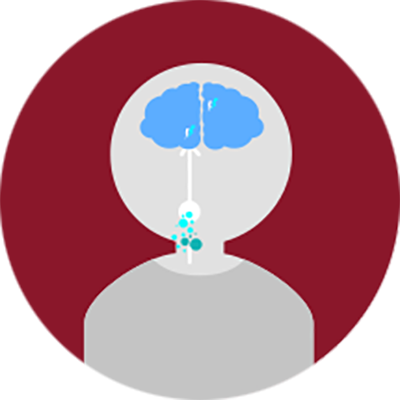
The nerves connected to these activated baroreceptors carry activation messages via afferent fibers to the brain (hypothalamus), which then stimulates the parasympathetic nervous system involving the vagus nerve.
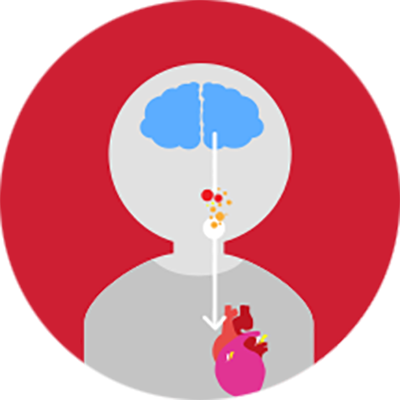
Activation of the parasympathetic nervous system causes:
(a) Vasodilation of the peripheral arteries and veins
(b) Lowering of pulse, i.e., slowing of the heart rate.

Slowing of the heart rate. Lowering of blood pressure.Daily use of the device for 30 to 35 days can result in the 24-hour lowering of BP, which indicates that the parasympathetic nervous system has been conditioned to maintain vasodilation and the lowered heart rate.
When the patented cold-tip therapy of the PhysioCue device is applied to the lateral temporal zone of the forehead during an episode of migraine or a severe headache, the pain can lessen and even disappear.
Although multiple theories of migraine have been proposed, the current thinking is leading toward neurogenic trigeminovascular (TGVS) inflammation as the key factor, not vasoconstriction or vasodilation, as previously accepted.
While it is understood that migraine is a complex disorder for which a unitary molecular explanation may be difficult, it appears that application of cold therapy, via our PhysioCue therapy and device, results in reduction of an inflammatory peptide known as Calcitonin gene-related peptide (CGRP), with cessation of further production of this peptide at the nerve endings, leading to mitigation of inflammation of nerve endings, resulting in mitigation of the migraine.
PhysioCue’s scientific team is pursuing the optimal combination of cooling temperature, micro-vibration and therapy duration to deliver immediate and effective migraine headache mediation, without the use of potent—and often ineffective—medications.